12 Best-Selling Dinosaur Fossil Replicas for Natural Museum
In major natural history museums, there are different types of dinosaur fossil / skeleton exhibits. They are basically handcrafted products from the manufacturers, with the entire body duplicated using fiberglass materials. It is precisely because of these dinosaur fossil replicas that natural history museums have attractions that keep visitors lingering.
A natural history museum cannot be without fossil replicas; otherwise, it would not be able to attract visitors or carry out educational outreach tasks. Based on more than ten years of experience in selling fossil replicas, we recommend 12 of the most popular dinosaur fossil exhibits to our customers.
QUICK FACTS:
#1. Trex fossil replica
#2. Triceratops fossil replica
#3. Stegosaurus fossil replica
#4. Trex skull replica
#5. Triceratops skull replica
#6. Apatosaurus (Brontosaurus) fossil replica
#7. Brachiosaurus fossil replica
#8. Shunosaurus fossil replica
#9. Dilophosaurus fossil replica
#10. Diplodocus fossil replica
#11. Anchiornis fossil replica
#12. Pterosaur fossil replica
1. Trex fossil replica
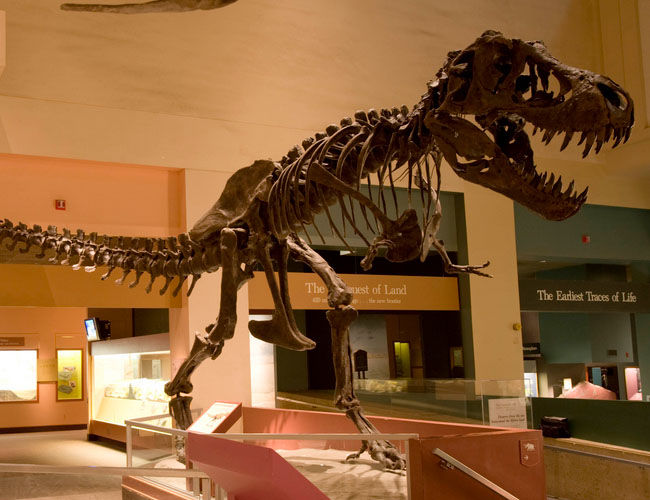
Tyrannosaurus Rex is the most famous and well-known dinosaur in the world, bar none. With its enormous size, powerful bite, and sharp teeth, this apex predator became the largest carnivorous dinosaur in Earth’s history (some estimates suggest Spinosaurus was longer than Tyrannosaurus Rex, but much smaller), and also the largest land carnivore ever. It lived in the Late Cretaceous period, approximately 68 to 66 million years ago, and dominated North America for 2 million years.
Since the discovery of Tyrannosaurus Rex fossils in 1900, approximately 50 Tyrannosaurus Rex fossils have been discovered and excavated over the next 100 years. Their size ranges from only 2.82m to 12.35m (some individuals can be reconstructed to be 13m long), and their age ranges from 2 to 30 years old, covering the entire developmental process of Tyrannosaurus Rex. It can be said to be the dinosaur species with the richest fossil material.
2. Triceratops fossil replica
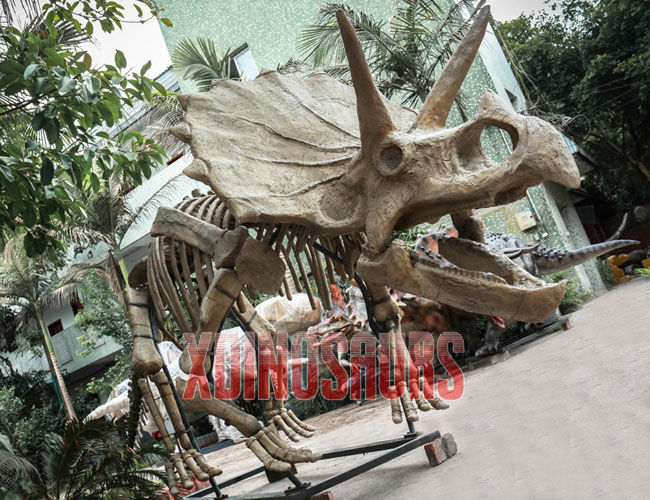
Triceratops fossils were discovered in the Late Cretaceous Maastrichtian stage strata of North America, dating back approximately 68 to 65 million years. Both Triceratops and Tyrannosaurus Rex belong to the last vestiges of the dinosaurs and were extremely ferocious. They possessed parrot-like, pointed beaks, which helped Triceratops cut through plant roots and reach fruit. Their mouths also contained a “spectacular” array of 400-800 teeth, arranged in 3-5 layers, earning them the nickname “food crusher.”
The largest extant Triceratops skeleton fossil, “Big John,” was unearthed in South Dakota, USA, in 2014. Its skeleton is over 60% complete, with the skull also 60% intact. Certified by Guinness World Records as the world’s largest Triceratops specimen, it is assembled from hundreds of bones, measuring 7-8 meters in length, with a skull measuring 2.62 meters long and 2 meters wide. Its neck frill retains what appears to be damage from a fight.
3. Stegosaurus fossil replica
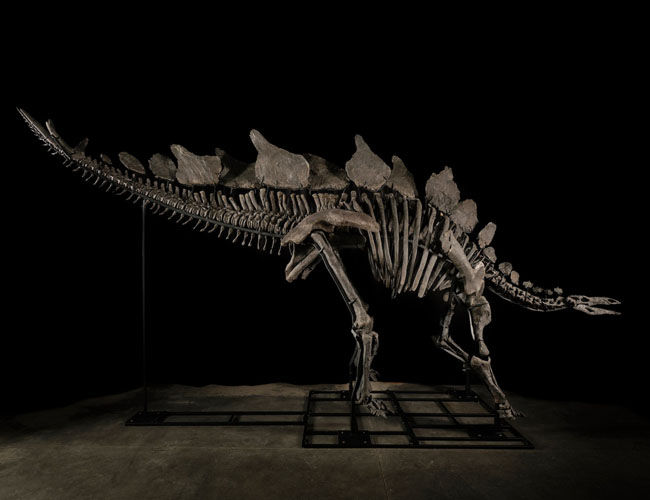
This stegosaur fossil, one of two dinosaur fossils first discovered in Fengning County, Hebei Province, belongs to the core area of the Early Cretaceous Jehol Biota and is a large dinosaur fossil found in Hebei Province. The fossil is approximately 5 meters long, with nearly 100% skeletal integrity and skin impressions covering an area of about 3 square meters. The scale-like patterns are clearly visible, and the preservation of its skin impressions surpasses that of any other known dinosaur skin fossil.
Stegosaurus had a bird-like, sharp beak without teeth, but with some small teeth on the sides of its mouth. Its back had 17 plate-like bones, and its tail had long spikes at the tip. These spikes were 4 feet long. It was 7 meters long in total, and if the height of the bone plates were included, its height could reach 3.5 meters. Its entire body was like an elephant’s, but it had only a pitifully small head, with a brain only the size of a walnut.
4. Trex skull replica
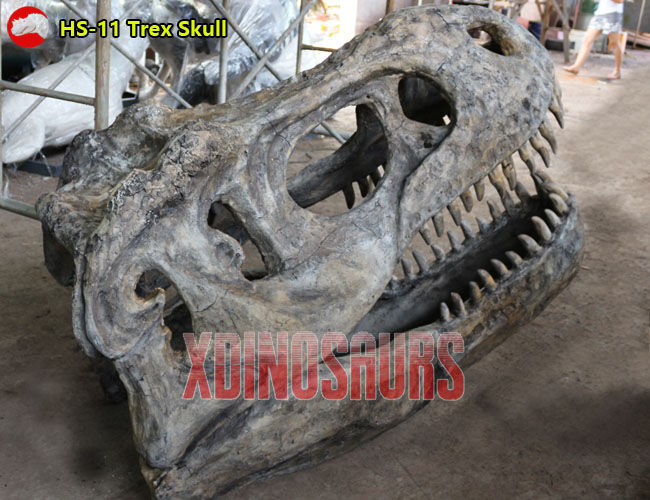
Massive and robust, the skull of an adult Tyrannosaurus rex can reach a length of 1.5–1.75 meters and a width exceeding 1 meter, making it one of the largest and most powerful skulls among terrestrial carnivorous dinosaurs. The sull is relatively short from front to back and tall from top to bottom, forming a “square” shape to enhance biting strength.
5. Triceratops skull replica
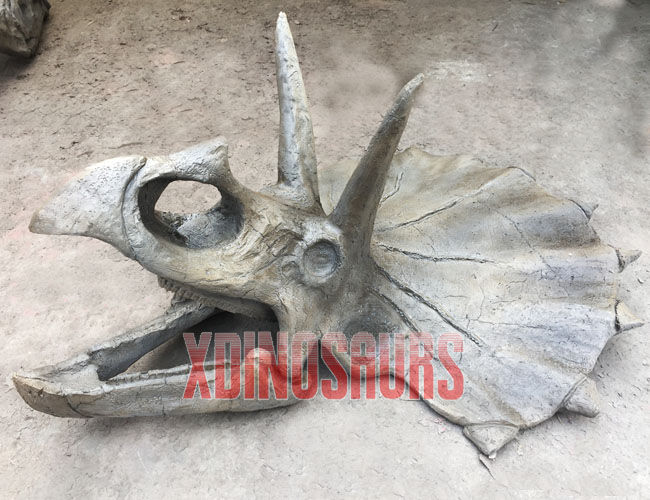
The Triceratops skull is one of the largest among all terrestrial animals, reaching a length of 2.6–3 meters. Some specimens, such as “Big John“, have skulls measuring 2.62 meters in length and 2 meters in width. The skull length accounts for approximately one-third of the total body length. The estimated weight of the skull can reach 315 kilograms. The length may exceed 2.5 meters, with some individuals surpassing 1.5 meters.
6. Apatosaurus (Brontosaurus) fossil replica

The naming of Brontosaurus dates back to the first fossil war in 1879. Marsh’s expedition team unearthed two incomplete sauropod skeletons without skulls in Wyoming. To beat others to publication, he hastily named the skeletons “Brontosaurus”. Then, he launched a full-scale propaganda campaign, declaring in his writings: “We astonishingly discovered this colossal dinosaur, with a bulky body, well-developed limbs, a long neck, and tail. This creature weighed 30-35 tons, measured 21-27 meters in length, and its neck was even longer than its body—reaching up to 6 meters! Its tail stretched approximately 9 meters, and it likely stood on its hind feet, towering into the clouds… It probably inhabited plains and forests, and may have traveled in herds. When a massive group of Brontosaurs approached from afar, the dust would obscure the sky and the thunderous sound would echo like rolling thunder. Hence, Marsh named it “Brontosaurus”.
7. Brachiosaurus fossil replica
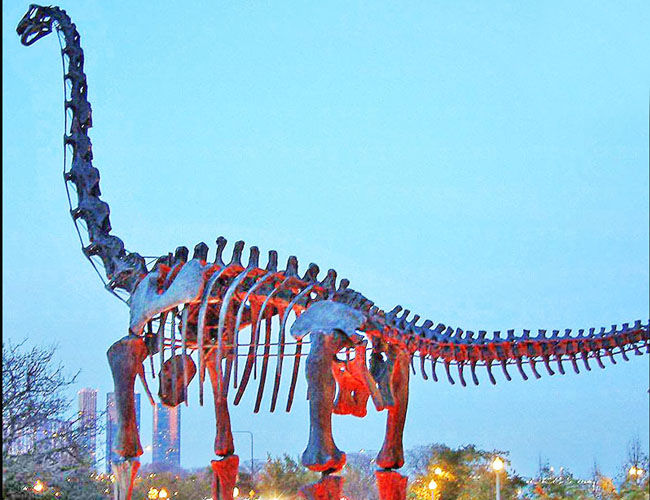
The Brachiosaurus skeleton includes the skull, 13 cervical vertebrae, 11 or 12 dorsal vertebrae, and a pelvis formed by the fusion of 5 caudal vertebrae. In addition, some paleontologists believe that the brachiosaurus had a huge heart that constantly pumped blood through its neck to its head. Some paleontologists even think that, in order to circulate blood throughout its body, the brachiosaurus might have had several hearts. The massive body of the brachiosaurus was supported by its sturdy limbs.
8. Shunosaurus fossil replica
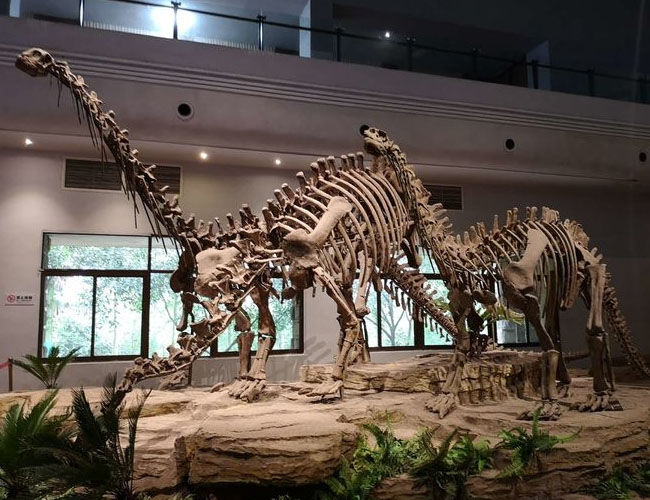
Shunosaurus has a short and deep skull, with its nostrils located low on the snout, and its spatulate teeth are quite sturdy. Shunosaurus has 12 cervical vertebrae, 13 dorsal vertebrae, 4 sacral vertebrae, and 43 caudal vertebrae, with some of the caudal vertebrae shaped like a chevron, similar to the later Diplodocus. In 1989, it was discovered that the tip of Shunosaurus’s tail had a tail club, which may have been used to fend off enemies.
9. Dilophosaurus fossil replica
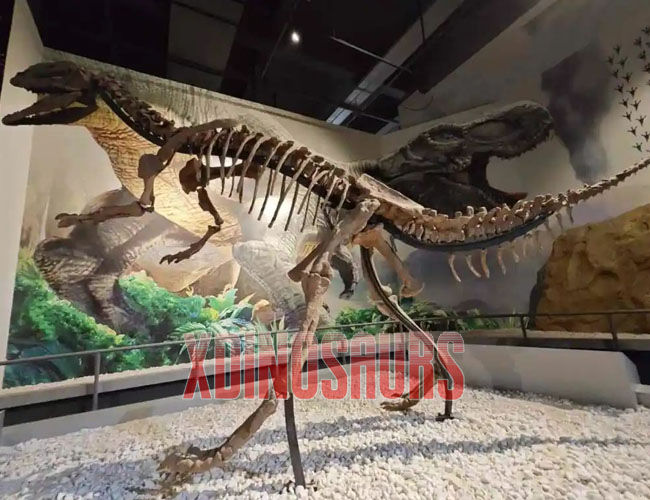
Dilophosaurus was a dinosaur that lived in the Early Jurassic period. It was about 6 meters long, and when standing, its head was approximately 2.4 meters high. It had two large bony crests on top of its head, hence the name Dilophosaurus. Its body was about 6 meters long and slender. There were two crescent-shaped bony crests on top of its head; it had a slender body with many small, sharp teeth; its forelimbs were short, and its hind limbs were long and strong, allowing it to walk on its hind legs and move quickly; its tail was long and powerful, helping to maintain balance while walking.
10. Diplodocus fossil replica
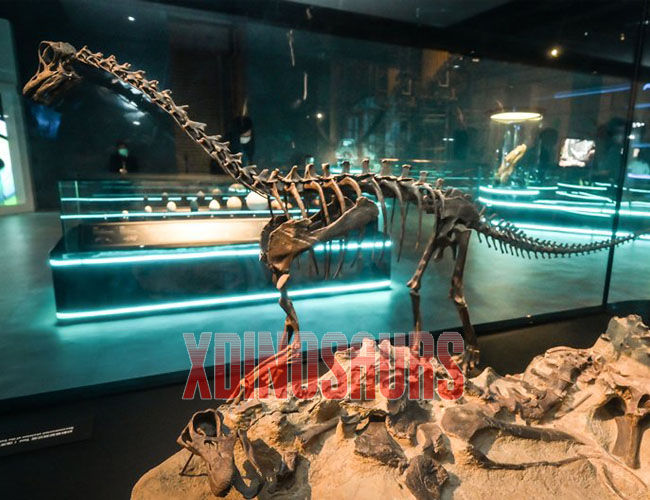
Diplodocus was a large, quadrupedal herbivore with a long neck and an extremely long, whip-like tail. Its forelimbs were slightly shorter than its hind limbs, and its body was generally in a horizontal posture. The long neck and tail at both ends, combined with its four pillar-like legs supporting its body, can be likened to a suspension bridge. Notably, Carnegie Diplodocus is one of the longest known dinosaurs with a complete skeleton, measuring approximately 25 meters in length.
11. Anchiornis fossil replica
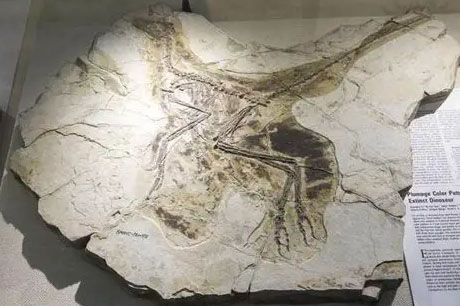
Discovered in Liaoning Province, China, the fossil dates back to the Middle or Late Jurassic period and is the earliest known feathered theropod dinosaur. The newly discovered *Anchiornis huxleyi* fossil features clearly visible feather imprints around its skeleton, particularly on its forelimbs, hind limbs, and tail, with unusual flight feathers—a feature unprecedented in extinct species. This is the earliest known feathered dinosaur fossil in the world, filling a crucial gap in the evolutionary history of dinosaurs to birds.
12. Pterosaur fossil replica
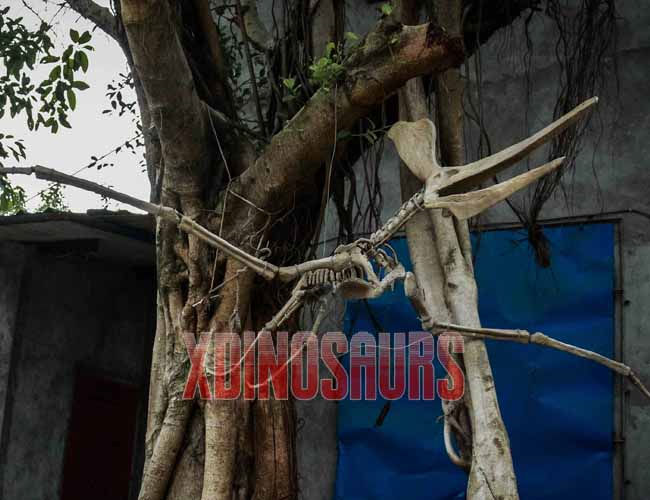
Pterosaurs had hollow skeletons filled with air, similar to the skeletons of modern birds. Their skeletons were composed of strong fibers, possessing high aerodynamic flexibility, which was well-suited for active flight. These characteristics indicate that pterosaurs adapted to flight as a new lifestyle during evolution, developing a series of unique physiological and anatomical structures.
Conclusion
The above 12 best-selling dinosaur fossil replicas are based on sales data (summarized by ourselves). The main sales locations are China, North America, and Europe. Natural history museum managers or operators in these three regions are most fond of purchasing fossil replicas for decoration. We certainly want to expand our fossil replica business to more natural history museums, and we welcome clients from all over the world to contact us to discuss cooperation.
Related Posts
5 Dinosaur Props: Immediatly Allow Tourists to Pay for Fun
The clients who operating dinosaur-themed exhibitions or shows, the selection and purchase of dinosaur props…
10 Popular Jungle Theme Animatronics Here
Among the themed animatronic animal models we have sold, jungle or forest theme animals are…
Manufactured 6 Hottest Trex Head Attractions
The Tyrannosaurus Rex head model is undoubtedly the most popular animatronic dinosaur head model we…
Leave a Reply